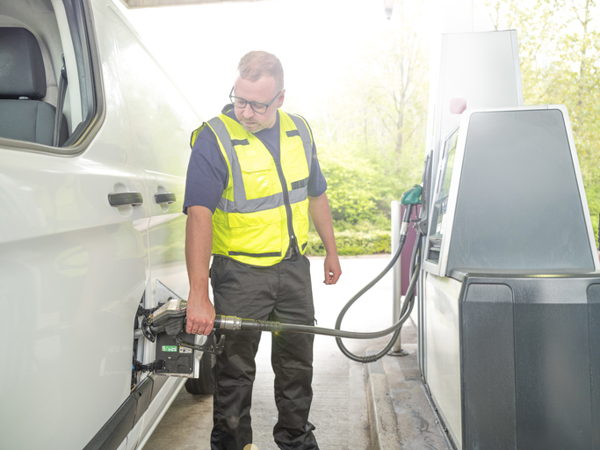
Farewell fees: Average cost of dropping off at UK’s busiest airports soar by a third compared to last summer
Last free drop-off disappears as London City introduces charges – in contrast to all the 10 busiest airports in the EU which don’t charge drivers at all

Sixteen of the UK’s 20 busiest airports have increased the charges drivers face for dropping off passengers, with the average cost increasing by a third since last summer, new RAC analysis has found.*
In what is now a common annual ritual, the price of dropping off close to airport terminals – in so-called ‘kiss-and-fly’ zones – rose by an average of £1.70, to £7, compared to this time last year. London Gatwick and London Stansted charge the highest fees (£10 for 10 minutes and 15 minutes respectively), followed by Edinburgh and Bristol (£8.50 for 10 minutes), and Leeds, London City and Bournemouth (each £8 for 10, five and 30 minutes respectively).
On a per-minute basis, London City is the most expensive, charging the equivalent of £1.60 a minute (£8 for up to five minutes). Like at many other airports, anyone stopping for longer than permitted faces a huge charge which can be as high as £100. But unlike others, London City has good accessible public transport access with a dedicated DLR station and trains running every few minutes during the day, providing a realistic alternative to driving for many passengers.
Manchester Airport, which costs £5.50 for five minutes (which equates to £1.10 a minute), is the next priciest place to drop off on a per-minute basis, followed by London Gatwick (£1 a minute), Edinburgh and Bristol (85p a minute) and Leeds Bradford (80p a minute).
Drivers might be surprised to learn that a £1 per minute drop-off rate is slightly more expensive on a per-minute basis than the cost of a return flight in August for two people from London Gatwick to Zaknythos (Zante), Greece.**
Four airports have not increased their charges this year, namely Liverpool John Lennon (£6 for 10 minutes), East Midlands (£5 for 15 minutes), Belfast City (£4 for 10 minutes) and Southampton (£7 for 20 minutes). But with London City now charging for drop-offs for the first time, all the UK’s top 20 busiest airports now levy a fee – whereas before Covid in 2019, six airports including London Heathrow and Gatwick still offered free convenient drop-offs.
The decision by airports to charge drivers for dropping off – a task that can take just moments – is at complete odds with what’s normal at other major airports around the world. None of the top 10 airports in the EU charge for drop-offs, and neither do many other major international airports including Atlanta (the world’s busiest), Dubai, Shanghai and Istanbul.
This year the RAC is warning drivers to be especially careful when dropping off friends and family members at airports that no longer have entry and exit barriers nor provide physical facilities for paying the fee – as there’s a risk they could forget to pay and be hit with a sizeable penalty. The five busiest – London Heathrow, Gatwick, Manchester, Stansted and Luton – insist drivers pay online or by phone before midnight the day after using the drop-off zone, which relies on them spotting the signage and acting on it quickly when back at home. A parking charge notice of £100 is sent to drivers that accidentally, or deliberately, don’t pay.
RAC senior policy officer Rod Dennis said:
“It’s disappointing to see so many airports charging so much for what many regard as a simple act of kindness in dropping off family and friends.
“Having a captive audience should be no excuse for these ‘farewell fees’ – especially when they’re completely at odds with how major airports around the world operate. Of course, airports need to manage the limited space they have carefully, but if free, convenient drop-off zones work at so many other international airports then why not here?
“The growing number of airports that operate barrierless ‘park now, pay later’ drop-off zones is also something drivers need to be extremely careful of. Those that drop off but miss the signage, or forget to go online or phone the airport to pay soon afterwards, can face a parking charge notice as high as £100 – a fee that feels distinctly disproportionate to the contravention.
“We certainly recommend drivers explore the free short-term parking options many airports offer but make themselves aware of just how long they’re permitted to park for. Those that plan on accompanying their passengers to the terminal and then coming back to their cars will almost certainly outstay the free period, which can end up being extremely costly.”


Notes to Editors
* Top 20 airports selected based on total passenger numbers reported to the CAA for 2025. Drop-off charges based on nearest drop-off zones to terminal buildings. These areas go under different names but are listed. We acknowledge airports offer either free or differently priced alternatives with connecting bus or shuttle services. 2026 figures correct as of July 2026; last year’s figures correct as of July 2025
** Based on two adults travelling from London Gatwick to Zaknythos on a major European airline – outbound flight on Saturday 8 August, returning Saturday 22 August. Total flight time of 420 minutes, return cost for two £398 = equivalent to 95p per minute. Prices correct as of 16 July 2026

Press team